

Barges and Lighters
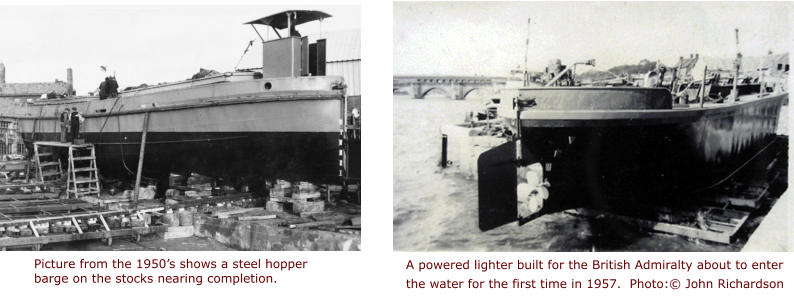
In 1950 a motor barge was to be the first ever steel vessel to
be built at Berwick. Over the years more barges and lighters
would follow.
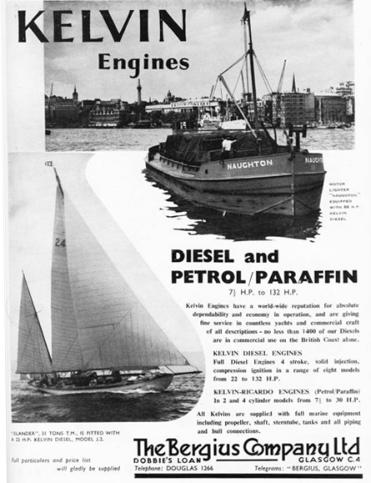
The first ever steel vessel to be built at Berwick was the 90’ motor barge Naughton
that took to the Tweed on the 16th May 1951. Naughton was one of three motor
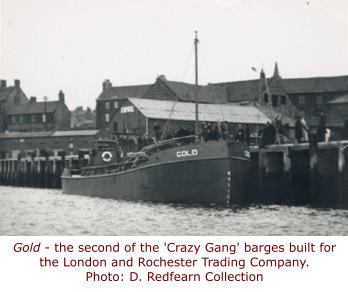
barges built for the London and Rochester Trading Company. The others, Gold
and Silver, were launched a year apart in December 1951 and December 1952.
All three vessels were powered by Kelvin diesel engines. Naughton was originally
fitted with the Kelvin 66hp K3 model. After entering service this was later
replaced by the more powerful 88hp K4 engine fitted to Gold and Silver. The The
three Berwick-built motor barges joined a fleet of over 150 vessels operated by
the London and Rochester Trading Company and during their working lives
operated on the Thames and Medway.
Naughton and Gold took their names after characters from the famous British
comedy act the ‘Crazy Gang’ that comprised of three double acts – Jimmy Nervo
and Teddy Knox, Bud Flanagan and Chesney Allen and Charlie Naughton and
Jimmy Gold who
appeared together on
stage and radio alongside
‘Monsewer’ Eddie Gray.
Naughton and Gold
joined Nervo and Knox
two other ‘Crazy Gang’
vessels, already in
service with the London
and Rochester Trading
Company that had been
built elsewhere. Silver
was the last of the three barges built at Berwick for the London and Rochester
Trading Company that operated between 1924 and 1984. In 1969 it’s fleet consisted
of 185 vessels including motor ships, coastwise barges, estuary barges, lighters and
tugs.
While under the ownership of London and Rochester the vessel worked in and out
of the Thames with a crew of two A former skipper who also served on
Naughton and Gold recalled the diversity of cargoes carried and the places
visited. “We traded twixt Yarmouth & Dover ,…cargoes were grain, 200 ton, a lot
of fruit juice and tinned goods to Mistley. We did a lot of cargoes in an out of the
London docks including hoofs an horns - rats included!” The handling qualities of
these hard-working vessels were less fondly remembered. The same skipper
writing in 2009 recalled … “they went where they wanted to go when loaded, not
where you wanted!”.
Silver (Official Number 184228) , was listed in the 2006 - 2007 edition of Lloyds
Register of Ships. The vessel was recorded as being owned and operated by a
Nigerian company, Joseph Yambode and Sons Ltd. At the time, Silver was
believed to be the oldest known Berwick-built vessel still in operational service.
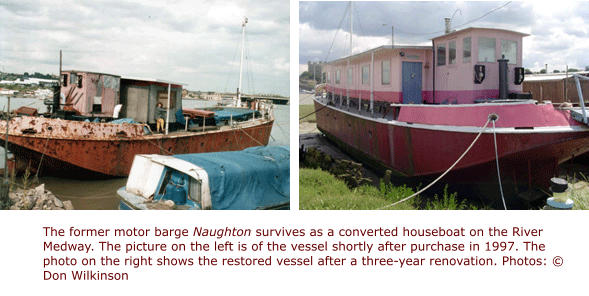
Naughton was later converted to a houseboat based on the River Medway in Kent. Purchased in 1997, the vessel underwent a three-year
conversion having previously been used as workshop (see pictures below).
Following the take-over of the Berwick yard
by Fairmile from William Weatherhead and
Sons in 1953, two further motor barges of a
similar design to those built for the London
and Rochester Trading Company were
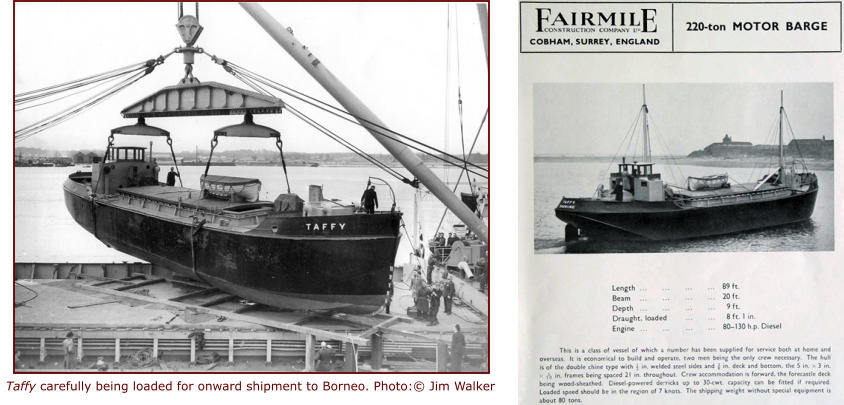
constructed. These were Taffy and Binnie
both completed in 1954. Built for the
Commissioners for the Crown Colonies the
vessels were registered in Kuching, Borneo
and were designed for operating on the
River Sarawak and short sea trips. Like the
other motor barges constructed before them
Taffy and Binnie were fitted ith Kelvin diesels
but this time it was the latest 6-cylinder 132 hp
K6 model that were used. The bigger engine
provided sufficient power to allow each vessel to
tow a pair of small barges that were also built at
Berwick.
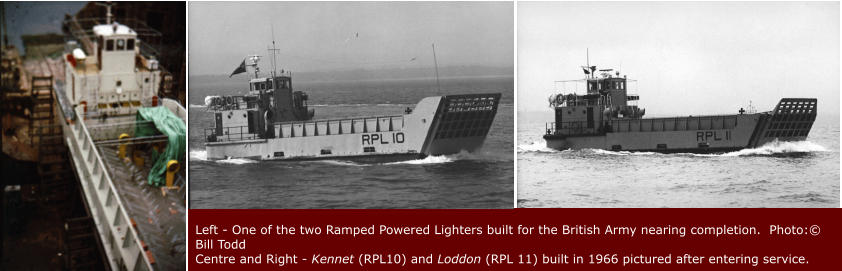
Other powered vessels of note built at Berwick include two Ramped Power Lighters, Kennet (RPL 10) and Loddon (RPL 11) built for the Royal
Logistics Corps of the British Army in 1966. Weighing 100 tons full load displacement and powered by two Rolls Royce C6S FLM diesels each
developing 435 h.p. both vessels were sold out of the service in 1984.

www.berwickshipyard.com



